
Service area
Heating and cooling service in Chicago, IL
Job records in Chicago
Homes and HVAC in Chicago
Chicago is a different kind of place for heating work than any suburb. The census counts about 1.28 million homes citywide in its 2024 one-year survey, and the median year built is 1954. Some 39 percent of them, nearly 500,000, were built in 1939 or earlier, 56 percent before 1960 and 73 percent before 1980. Most of the housing is not a detached house. Only 25 percent of homes are single-family detached, while buildings of two to four units hold another 26 percent.
Renters outnumber owners. About 47 percent of occupied homes are owner-occupied and 53 percent are rented. Utility gas is the main heating fuel in 78 percent of occupied homes, 911,923 of 1,172,455, and electricity is the main fuel in 18 percent, about 216,000 homes. These are citywide figures. This page covers the North Side and Northwest Side ZIP codes listed here, not every neighborhood.
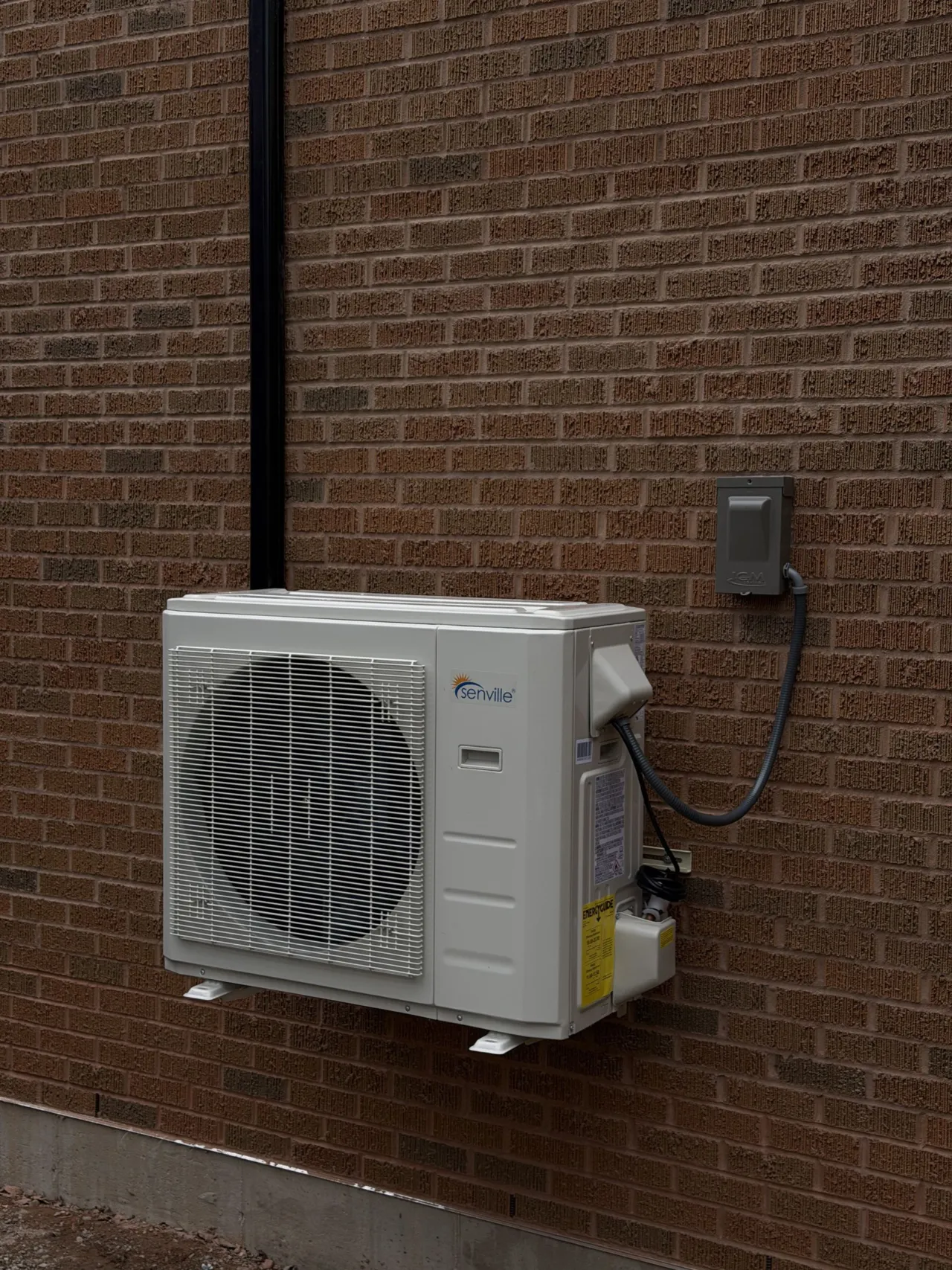
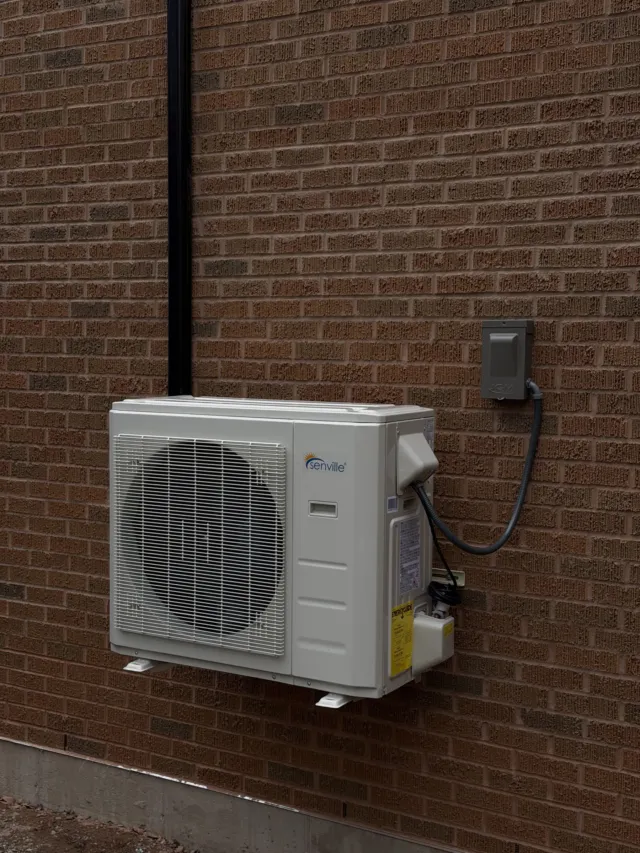
With that many two-, three- and four-unit buildings, the first question on a no-heat call is whether the equipment serves one apartment or the whole building. Individual furnaces, a shared boiler or separate forced-air systems per floor are all possible. We have worked in Chicago: we installed a Senville SENDC-36HF heat pump in September 2025 and a 24,000 BTU Senville ductless heat pump at the same property in December 2025.
Permits and utilities in Chicago
The City of Chicago's Department of Buildings says a building permit is not required to repair an existing heating, cooling or ventilation appliance, or to replace parts without altering its function or lowering its efficiency. In a residential building up to 4 stories, an in-kind replacement of a boiler, a furnace or an air conditioning appliance also does not need one. In-kind means the same type, size and shape. Other complete replacements need a permit. The exceptions may not apply to a Chicago Landmark or a landmark district, and the work must still meet the Chicago Construction Codes. Questions go to the assistance counter on the 9th floor of City Hall.
Chicago has a Heat Ordinance. From September 15 until June 1 a landlord must keep individual heating equipment in good working order and capable of holding 68 F, and portable space heaters do not count. Tenants report no heat at 3-1-1. Fines are $500 to $1,000 per day.
Peoples Gas delivers gas in the city. Its 2026 furnace rebate, shared with North Shore Gas, is $200 at 95 percent AFUE and $225 at 97 percent, for a furnace of 225 MBh or less.
Services we have done in Chicago
Nearby towns
Questions from this town
Do I need a permit to replace a furnace in Chicago?
It depends on the building. The Department of Buildings says no permit is needed to replace a furnace in-kind in a residential building up to 4 stories, meaning the same type, size and shape. Other complete replacements do need one, and the exception may not cover landmark properties. Confirm with the Department of Buildings counter at City Hall.
My landlord says the heat is not their job. What does Chicago require?
From September 15 until June 1 the Heat Ordinance requires landlords to keep individual heating equipment in good working order and able to maintain 68 F. Portable space heaters do not satisfy it. Tenants can report no heat at 3-1-1, and fines run from $500 to $1,000 per day per violation. Call 9-1-1 for immediate danger.
Can a space heater meet Chicago's heat requirement?
No. The Heat Ordinance says cooking appliances, domestic water heating equipment and portable space heaters cannot be used to meet the minimum heating requirements, and fireplaces cannot either. Permanent systems recognized by the Chicago Mechanical Code count, such as radiators, warm-air furnaces and heat pumps. A supplemental portable heater must stay at least 3 feet from anything that can burn.
Who delivers gas in Chicago, and is there a furnace rebate?
Peoples Gas delivers natural gas in the city. Its 2026 Home Energy Rebate Program, shared with North Shore Gas, pays $200 for a furnace of 225 MBh or less at 95 percent AFUE and $225 at 97 percent. The application is due within 30 days of installation and needs your gas bill and the AHRI certificate.
Heating or cooling trouble in Chicago?
Call and describe what the system is doing, or send a request and we will call you back.